


AI 기본법의 'AI 사용 고지'와 'AI 생성물 표시' 의무는 AI 제품·서비스를 이용자에게 직접 제공하는 인공지능 사업자에게 있습니다.
AI를 업무나 창작의 도구로 쓰는 이용자는 의무 대상이 아니라고 과학기술정보통신부 안내 지침은 밝혔습니다.
법은 2026년 1월 22일 전면 시행됐습니다. 다만 최소 1년 이상 계도기간을 두고, 그동안 사실조사와 과태료 부과를 유예합니다.
네이버 지식iN에서 'AI 기본법'으로 검색되는 질문이 10월 5일 기준 2만1천 건이 넘고, '인공지능 기본법'은 1만2천 건이 넘습니다.
블로그에 AI 그림을 올리면 표시해야 할까?
AI 기본법만 놓고 보면 그럴 의무는 없습니다.
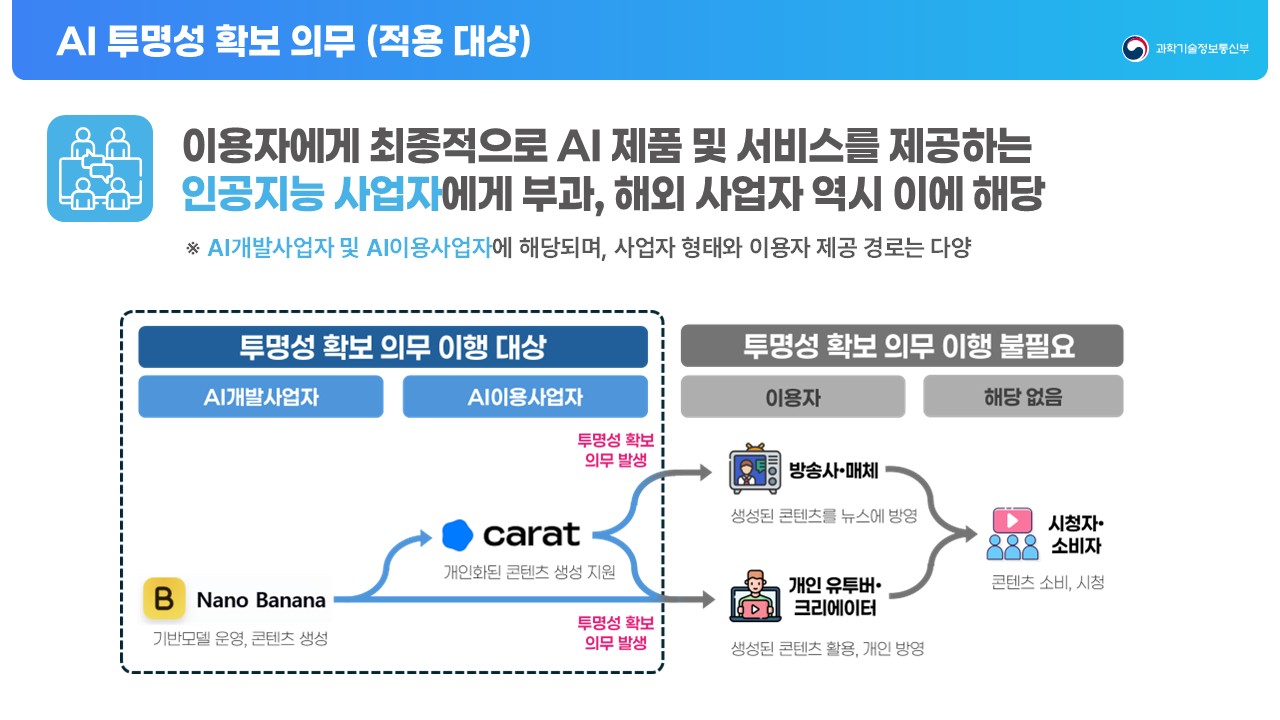
과기정통부가 1월 21일 공개한 「인공지능 투명성 확보 안내 지침」은 의무를 이행해야 하는 주체를 이용자에게 AI 제품·서비스를 직접 제공하는 인공지능 사업자로 정했습니다. 국내 이용자에게 서비스하는 해외 사업자도 포함됩니다.
반대로 AI 기술이나 서비스를 단순히 업무나 창작의 '도구'로 활용하는 이용자는 의무 대상에 해당하지 않는다고 명시했습니다. 제공받은 AI와 그 생성물을 활용하는 입장이기 때문이라는 설명입니다.
예로 든 것은 영화 제작사입니다. 영상 생성 AI로 영화를 만들어 배급해도 AI 서비스를 제공한 게 아니라 AI를 업무에 활용한 이용자라서 의무 대상이 아니라고 했습니다.
지침 자료의 그림도 같은 구분입니다. 생성된 콘텐츠를 활용하는 방송사·매체와 개인 유튜버·크리에이터를 '이용자'로 놓고 '이행 불필요'로 분류했습니다.
다만 이 지침은 AI 기본법의 투명성 의무를 다룬 것입니다. 글을 올리는 플랫폼이 따로 정한 AI 표시 규칙은 그 플랫폼 기준으로 확인해야 합니다.
서비스 안에서 쓸 때와 내려받을 때
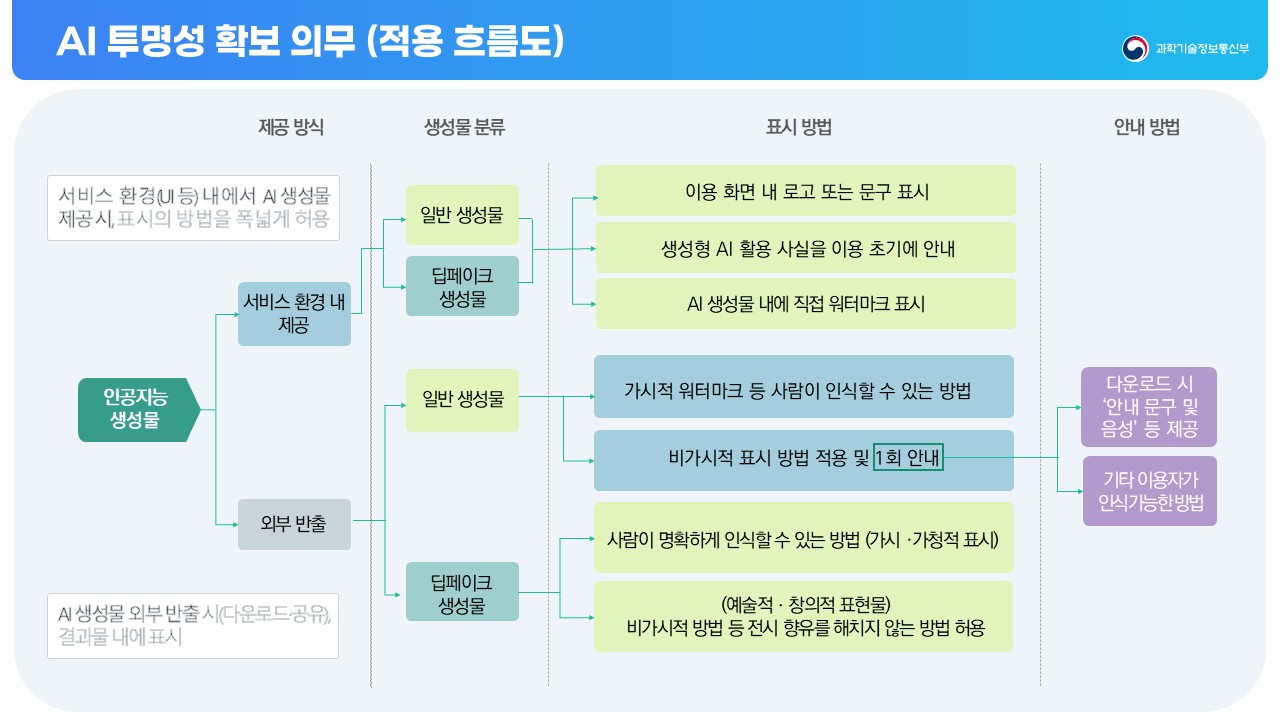
사업자의 의무는 두 갈래입니다. AI로 운용된다는 사실을 미리 알리는 사전 고지, 그리고 생성물이 AI로 만들어졌다는 표시입니다.
사전 고지
이용약관이나 계약서에 적거나, 앱 구동 화면에 생성형 AI 기반이라는 사실을 알리면 됩니다. 오프라인 서비스는 이용자가 쉽게 볼 수 있는 곳에 안내문을 붙이는 방식입니다.
생성물 표시
기준은 생성물이 서비스 안에만 머무는지, 밖으로 나가는지입니다.
서비스 화면 안에서만 쓰이면 로고나 화면 표시처럼 유연하게 해도 됩니다. 챗봇은 이용 전 안내나 화면 속 로고, 게임·메타버스는 로그인 때 안내나 캐릭터에 AI임을 표시하는 방식을 인정했습니다.
내려받기나 공유로 밖에 나갈 때는 더 확실해야 합니다. 사람이 알아볼 수 있는 워터마크로 표시하거나, 문구·음성으로 한 번 안내한 뒤 메타데이터처럼 기계가 읽을 수 있는 표시를 넣도록 했습니다.
딥페이크는 '사람이 알아보게'
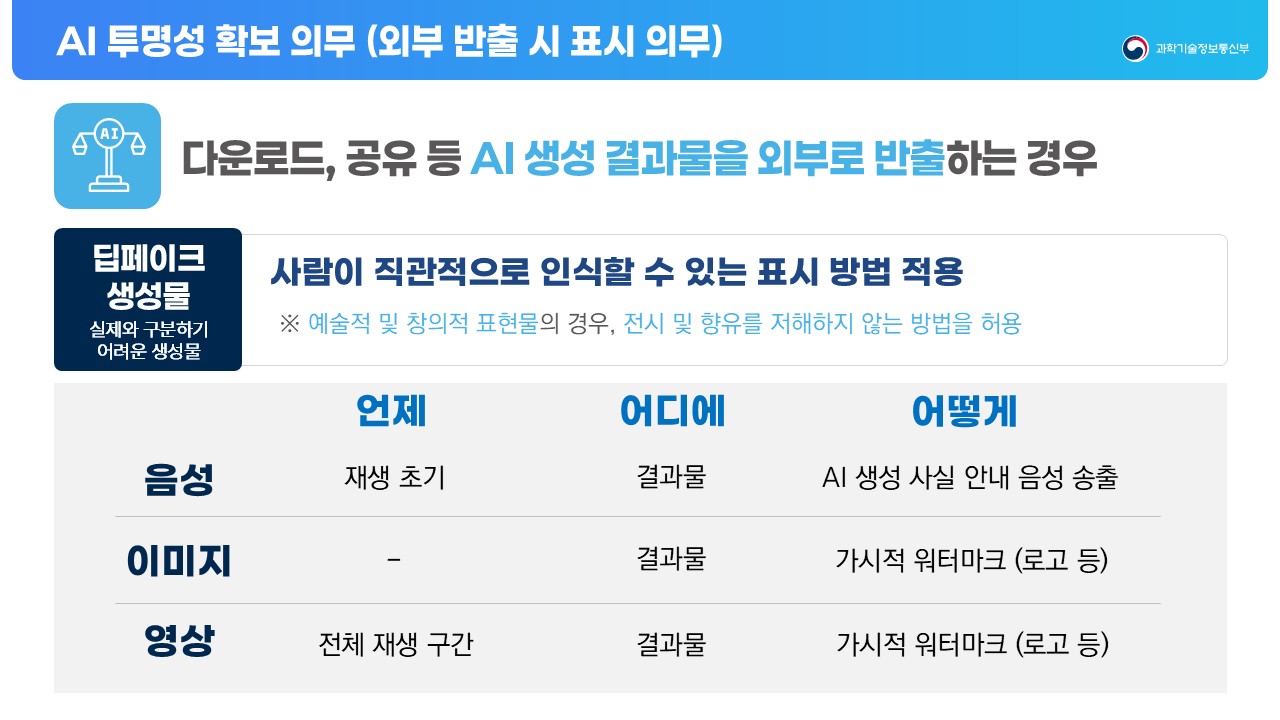
실제와 구분하기 어려운 딥페이크 생성물은 반드시 사람이 명확하게 인식할 수 있는 방법으로 표시해야 합니다.
지침 자료는 방법도 적었습니다. 음성은 재생 초기에 AI 생성 사실을 알리는 음성을, 이미지는 결과물에 로고 같은 가시적 워터마크를, 영상은 전체 재생 구간에 가시적 워터마크를 넣는 식입니다.
예술적·창의적 표현물이라면 전시와 감상을 해치지 않는 방법도 허용됩니다.
과태료는 당장 매겨지지 않습니다. 계도기간 동안 사실조사는 인명사고나 인권 훼손처럼 중대한 사회적 문제가 생긴 극히 예외적인 경우에만 하겠다고 과기정통부는 밝혔습니다.
결국 기준은 '누가 AI 서비스를 제공하느냐'입니다. AI로 만든 그림을 블로그에 올리는 개인은 이용자이고, 그 그림을 만들어 준 서비스가 표시 의무를 집니다.
Under Korea's AI Basic Act, the duties to give notice of AI use and to label AI-generated output fall on AI business operators that provide AI products or services directly to users.
Users who rely on AI as a tool for work or creative projects are not covered, according to the Ministry of Science and ICT's guidelines.
The law took full effect on January 22, 2026, with a guidance period of at least a year during which fact-finding probes and fines are suspended.
On Naver's Q&A service, a search for 'AI Basic Act' returns more than 21,000 questions as of October 5, and 'Artificial Intelligence Basic Act' more than 12,000.
Do you have to label AI images on your blog?
Under the AI Basic Act alone, no.
The ministry's AI transparency guidelines, released January 21, name the responsible party as the AI business operator that provides AI products or services directly to users - including overseas operators serving Korean users.
By contrast, users who simply use AI technology or services as a 'tool' for work or creation are expressly not covered, because they use AI and its output that someone else provides.
The example given is a film studio: making and distributing a film with video-generation AI does not make it an AI service provider but a user, so the duty does not apply.
The guideline diagram draws the same line, classing broadcasters, media and individual YouTubers and creators who use generated content as 'users' with no duty to comply.
These guidelines cover only the Act's transparency duty, though. Any AI-labeling rules set by the platform you post on have to be checked against that platform's own terms.
Inside a service versus downloaded
Operators have two duties: telling users in advance that a service runs on AI, and labeling output as AI-generated.
Advance notice
State it in the terms of service or contract, or show on the app's start screen that it runs on generative AI. Offline services can post a notice where users will easily see it.
Labeling output
The test is whether output stays inside the service or leaves it.
If it is shown only within the service, flexible labeling such as a logo or on-screen notice is fine: chatbots can give a notice before use or show a logo, and games or metaverse services can notify at login or mark characters as AI.
When output leaves the service through downloads or sharing, labeling must be firmer: a watermark people can perceive, or a one-time notice in text or voice plus a machine-readable mark such as metadata.
Deepfakes must be recognizable to people
Deepfakes that are hard to tell from reality must always be labeled in a way people clearly recognize.
The guideline material spells out how: for audio, a spoken notice of AI generation at the start; for images, a visible watermark such as a logo on the output; for video, a visible watermark throughout playback.
For artistic or creative works, methods that do not spoil display or enjoyment are allowed.
Fines are not coming right away. During the guidance period, the ministry says fact-finding will happen only in extremely exceptional cases involving serious social harm such as loss of life or human-rights violations.
In the end the test is who provides the AI service. An individual posting AI-made images on a blog is a user; the service that generated them carries the labeling duty.