


AI가 만든 그림이나 노래 그 자체는 저작권 등록이 되지 않습니다.
사람이 손을 더해 창작적으로 기여한 부분이 있으면 그 부분만 등록할 수 있다고, 한국저작권위원회가 2025년 6월 30일 발간한 저작권 등록 안내서는 밝혔습니다. 문화체육관광부와 함께 기획한 안내서입니다.
네이버 지식iN에서 'AI 저작권'으로 검색되는 질문이 10월 5일 기준 1만 건이 넘습니다.
AI가 만든 그림, 내 저작물일까?
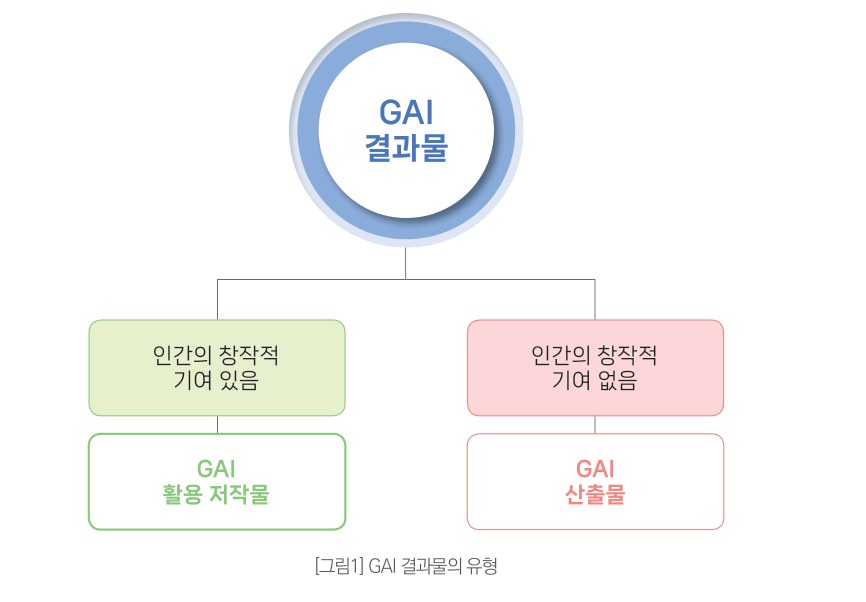
저작권법상 저작물은 '인간'의 사상 또는 감정을 표현한 창작물입니다.
그래서 사람의 창작적 기여 없이 AI가 기계적으로 만들어 낸 결과물은 저작물이 아니고, 등록도 할 수 없다고 안내서는 정리했습니다. 안내서는 이를 'GAI 산출물'이라고 부릅니다.
반대로 사람이 AI를 도구로 써서 창작적 기여를 더한 결과물은 'GAI 활용 저작물'로 등록할 수 있습니다.
기여로 인정될 수 있는 경우로 세 가지를 들었습니다. 자기 저작물을 프롬프트로 넣어 그 창작성이 결과물에 나타난 경우, AI 산출물을 고치고 더한 '추가 작업'에 창작성이 있는 경우, 산출물을 고르고 배열·구성한 데 창작성이 있는 경우입니다.
프롬프트만 잘 쓰면 어떨까요?
안내서는 2025년 6월 기준 나라마다 입장이 다르다고 적었습니다. 미국은 프롬프트만으로는 저작자가 되기에 충분하지 않다고 보고, 일본은 프롬프트의 분량·내용과 생성 횟수, 선택 여부를 따져 인정될 수도 있다고 보며, 중국에는 인정한 판결이 있다는 것입니다.
프롬프트 자체에 창작성이 있으면 프롬프트는 저작물로 등록할 수 있습니다. 그렇다고 그 프롬프트로 만든 산출물의 창작성까지 인정되는 것은 아니라고 했습니다.
등록되는 건 사람이 손댄 부분만
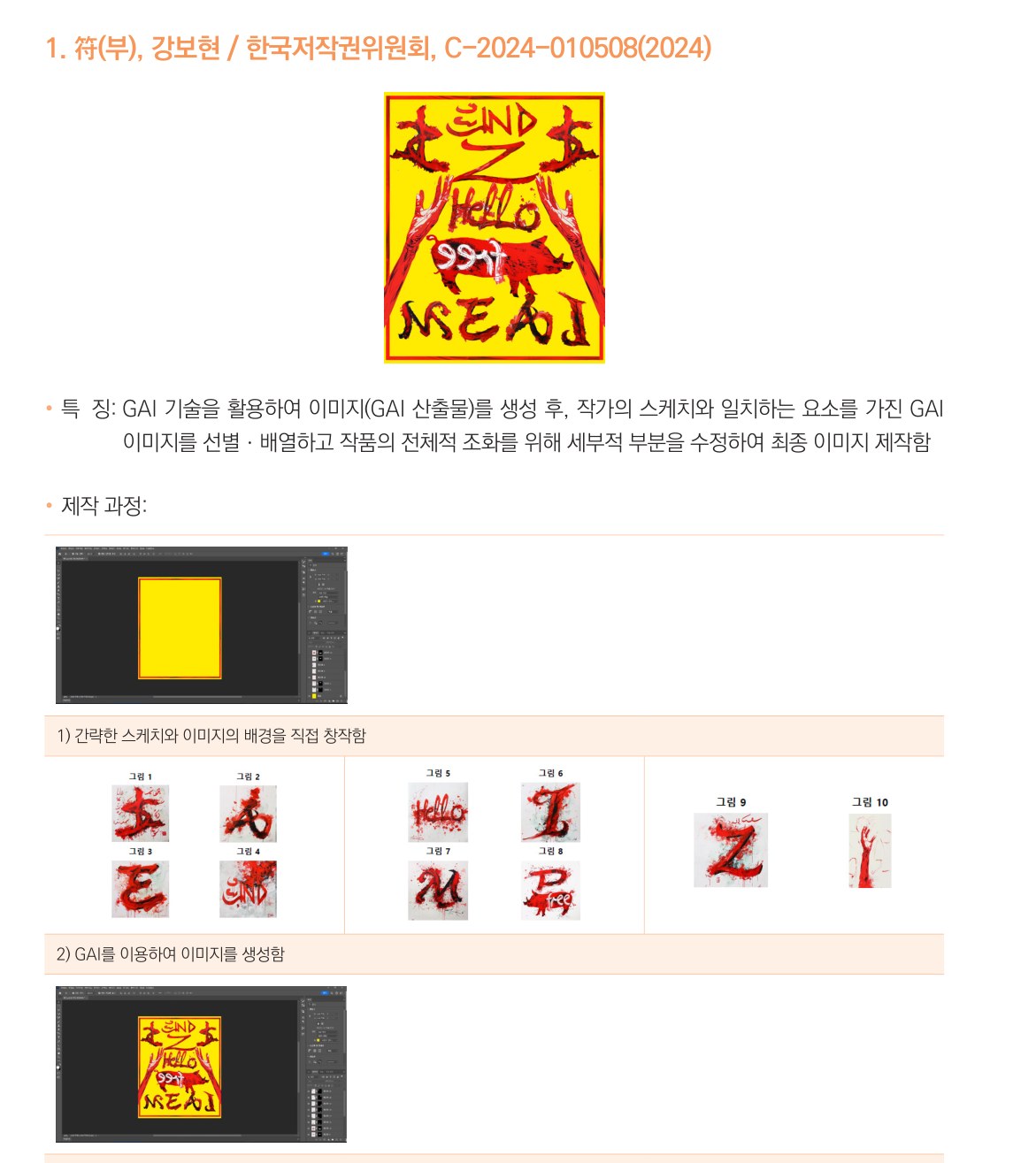
등록의 효력은 사람이 창작적으로 기여한 부분에만 미칩니다. 안내서의 사례를 보면 어디까지인지가 분명해집니다.
- 만화에서 글은 사람, 그림은 AI — 어문저작물로 등록되고 효력은 글에만
- 작곡은 사람, 가사는 AI — 음악저작물로 등록되고 효력은 작곡에만
- 사람이 스케치하고 AI가 색칠 — 미술저작물로 등록되고 효력은 스케치에만
- AI가 만든 이미지들을 사람이 골라 배열 — 편집저작물로 등록 가능
위 그림의 국내 등록 사례도 같습니다. 작가가 그린 간단한 스케치와 배경에 맞춰 AI로 이미지를 만든 뒤, 골라 배열하고 세부를 고쳐 완성한 작품입니다.
AI로 만든 곡을 직접 불렀다면 어떨까요?
AI가 작곡·작사한 곡을 사람이 불러 발표하면 작곡·작사 부분은 등록할 수 없습니다. 대신 노래를 부른 것은 실연으로, 음반으로 만들었다면 음반으로 저작인접권을 등록할 수 있다고 안내서는 적었습니다.
음악이나 영상은 프롬프트를 넣는 수준을 넘는 창작적 기여가 필요하고, 그 기여를 구체적으로 입증할 수 있어야 등록 가능성이 높아진다는 당부도 붙어 있습니다.
등록할 때 꼭 적어야 할 것
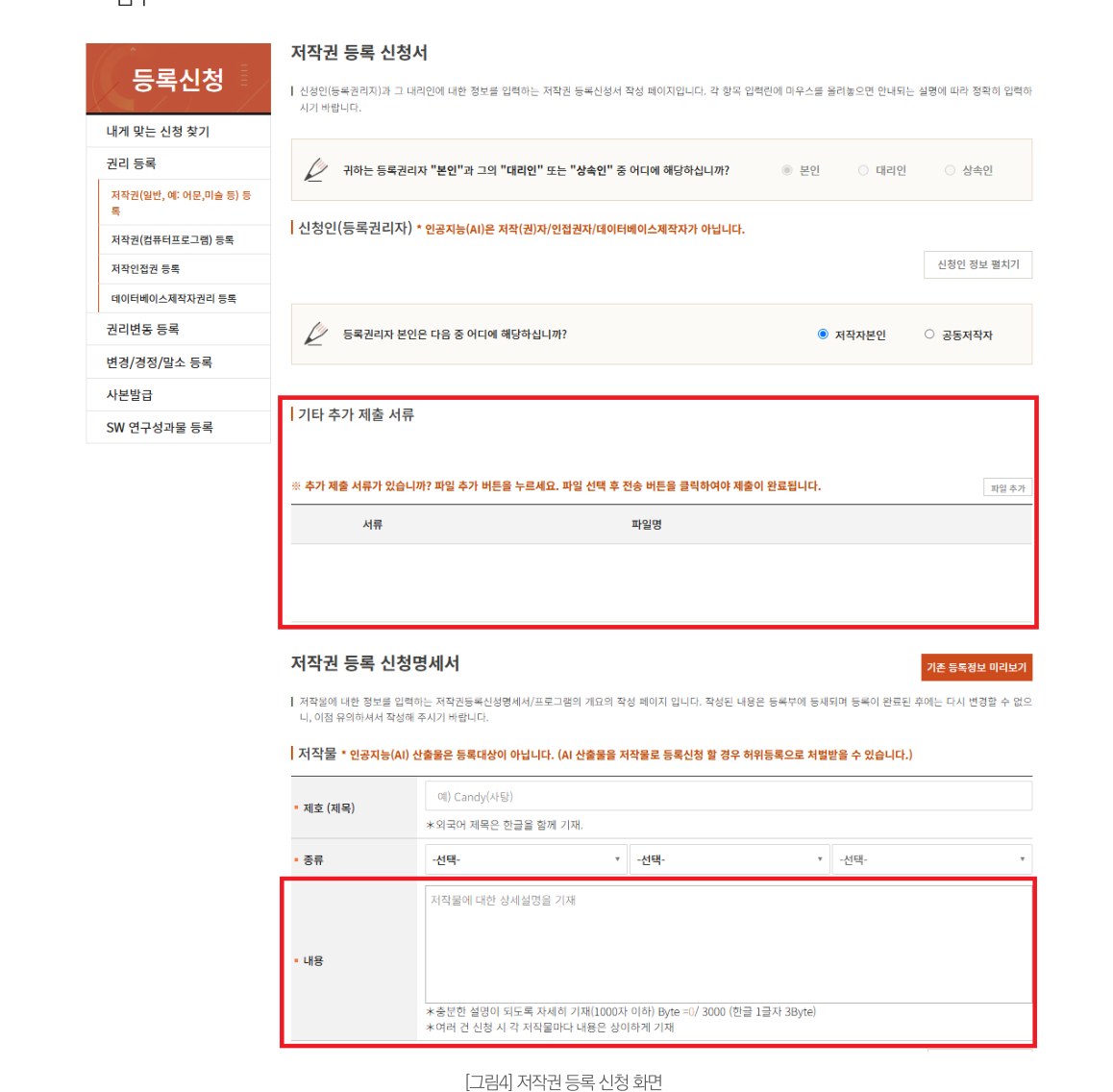
등록은 저작권 등록 누리집(cros.or.kr)에서 온라인으로 하거나, 우편·방문으로 신청합니다.
핵심은 '저작물 내용' 칸입니다. AI 산출물 부분과 사람이 창작한 부분을 구분해 적고, 설명이 더 필요하면 '기타 추가 제출 서류'에 자료를 첨부합니다.
거짓으로 적으면 처벌받습니다. 등록 심사는 신청서와 제출물만 보는 형식 심사지만, AI 산출물을 사람이 창작한 것처럼 등록하면 허위 등록으로 3년 이하 징역이나 3천만 원 이하 벌금에 처해질 수 있습니다.
AI 개발사는 도구를 제공했을 뿐이라 저작자로 등록할 수 없고, 회사 업무로 만든 경우에도 '업무상 작성에 참여한 사람' 칸에 AI를 적을 수 없습니다.
남의 얼굴이 나온다면 저작권과 별개로 초상권도 따져야 합니다. 방송통신위원회 카드뉴스는 AI 결과물이라도 공인의 초상임을 알 수 있는 콘텐츠는 무단 게시가 불가능하다고 안내합니다.
결국 기준은 하나입니다. 사람이 무엇을 직접 만들었고, 그것을 보여 줄 수 있느냐입니다.
An image or song made by AI cannot itself be registered for copyright.
Only the parts a person added through creative contribution can be registered, says the copyright registration guide the Korea Copyright Commission published on June 30, 2025, planned together with the Ministry of Culture, Sports and Tourism.
On Naver's Q&A service, a search for 'AI copyright' returns more than 10,000 questions as of October 5.
Is an AI-made image your work?
Under Korea's Copyright Act, a work is a creative expression of human thoughts or emotions.
So results that AI produces mechanically, without human creative contribution, are not works and cannot be registered, the guide sets out. It calls these 'generative AI output'.
By contrast, results where a person used AI as a tool and added creative contribution can be registered as 'works using generative AI'.
The guide gives three examples of contribution: entering your own work as a prompt so its creativity shows in the result; creative 'additional work' editing or adding to AI output; and creative selection, arrangement or composition of the output.
What about just writing good prompts?
As of June 2025, the guide notes, countries differ: the US holds that prompts alone are not enough to make a user the author, Japan says it may be recognized depending on a prompt's length and content, the number of generations and selection, and China has a ruling that recognized it.
A prompt that is itself creative can be registered as a work. But that does not make the output generated from it creative, the guide says.
Only what a person touched gets registered
Registration covers only the parts a person contributed creatively. The guide's examples show where the line falls.
- Comic with human text and AI drawings - registered as a literary work, covering the text only
- Human composition with AI lyrics - registered as a musical work, covering the composition only
- Human sketch colored by AI - registered as an artistic work, covering the sketch only
- AI images selected and arranged by a person - registrable as a compilation
The Korean case pictured above works the same way: AI images were generated to match the artist's simple sketch and background, then selected, arranged and refined into the finished piece.
What if you sang an AI-made song yourself?
If a person sings and releases a song whose music and lyrics AI wrote, the music and lyrics cannot be registered. The singing can be registered as a performance, and a recording as a phonogram, under neighboring rights, the guide says.
For music and video it adds that creative contribution beyond entering prompts is needed, and being able to prove that contribution concretely improves the chance of registration.
What you must state when registering
You apply online at the registration site (cros.or.kr), or by post or in person.
The key is the work description field: describe the AI output and the human-created parts separately, and attach more material under additional documents if needed.
False statements are punished. Review only checks the application and submitted materials, but registering AI output as human-made can count as false registration, punishable by up to three years in prison or a fine of up to 30 million won.
AI developers only supplied a tool and cannot be registered as authors, and for works made on the job, AI cannot be listed among the people who took part in creating it.
If someone's face appears, portrait rights matter separately from copyright. A Korea Communications Commission card guide says content recognizable as a public figure's likeness cannot be posted without permission, even if AI made it.
In the end there is one test: what a person made directly, and whether they can show it.